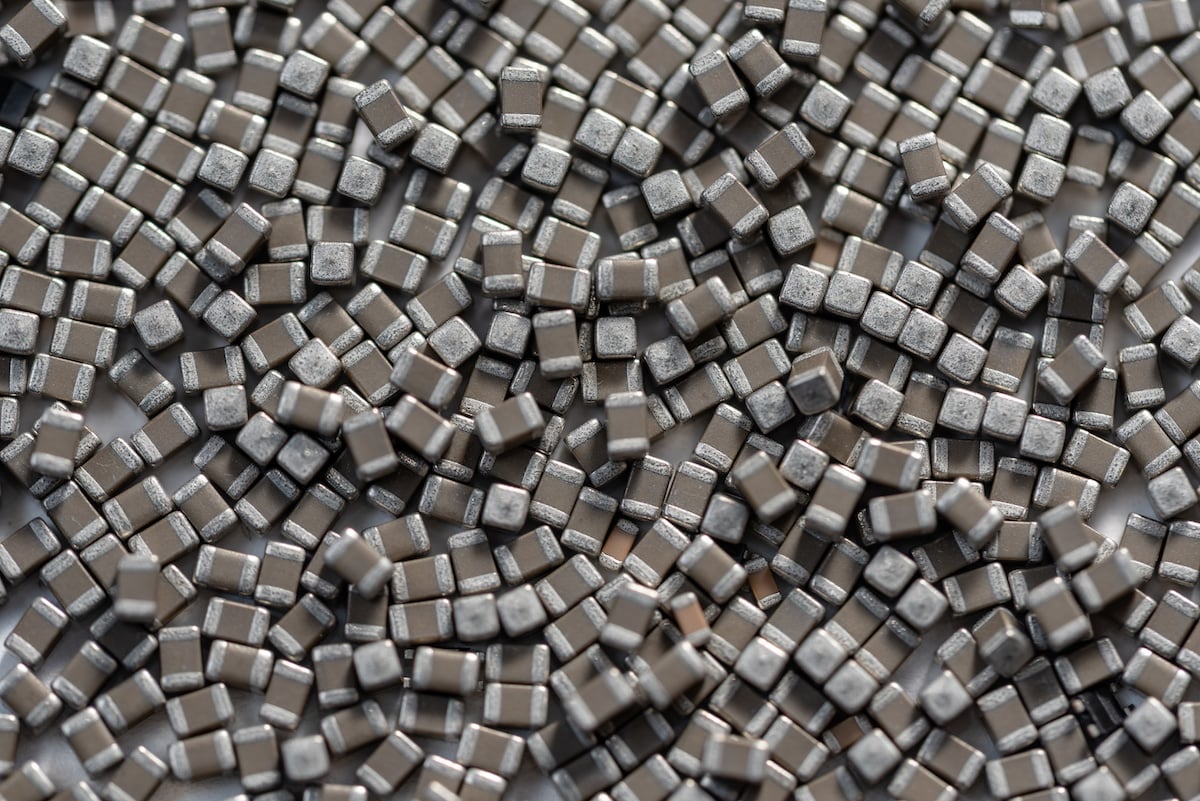
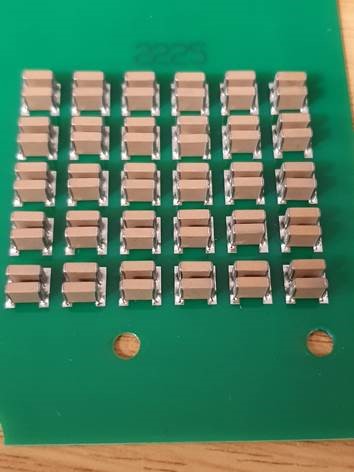
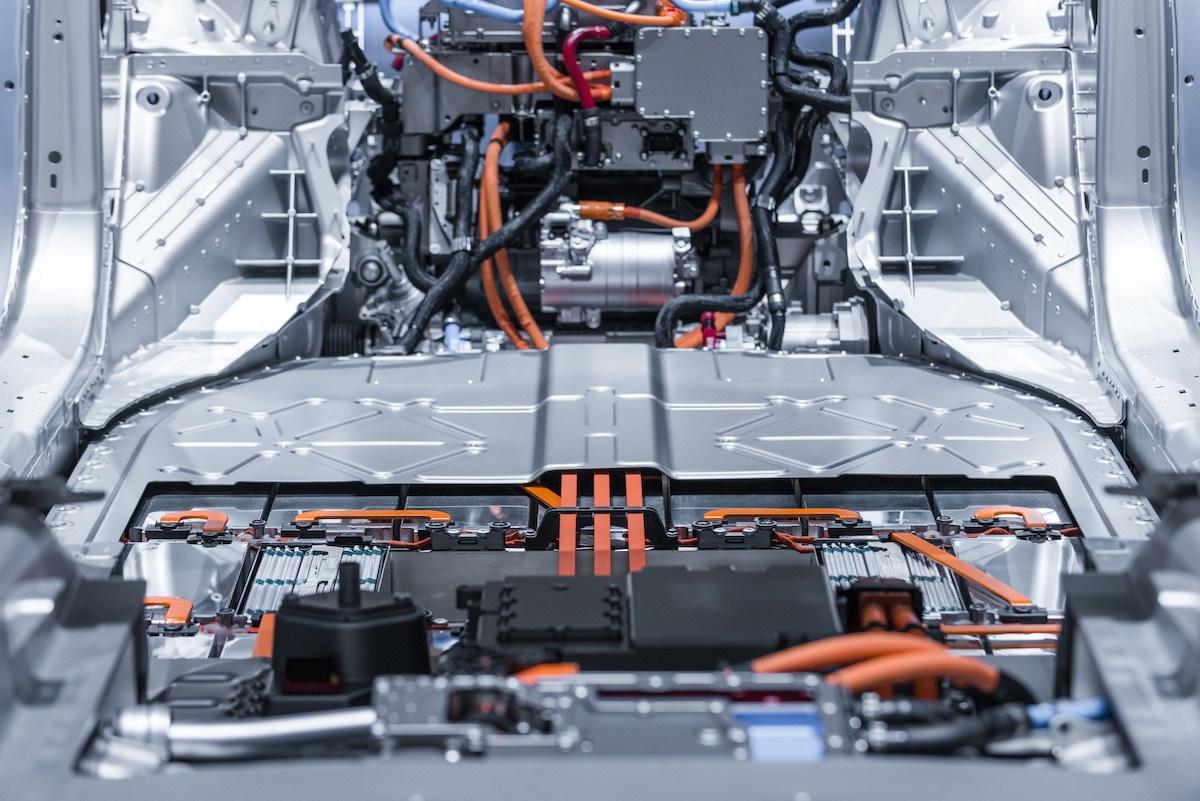
To meet consumer demand for longer driving ranges and faster charging, electric vehicle (EV) manufacturers are redesigning vehicles to move from 400V to 800V battery systems. As a result of using higher operating voltages, EV designers and original equipment manufacturers (OEMs) need components, such as multi-layer ceramic capacitors (MLCCs), that can withstand voltages well beyond those expected under normal operating conditions. For example, a drivetrain running off an 800V battery system may be subjected to a withstand test of up to 4kV DC for 60 seconds, which is a standard safety test in high voltage systems.
Read More
Topics:
Capacitor,
Automotive,
Electric Vehicles
Today, the design and development of many applications, such as power electronics in electric vehicles (EVs), is driven largely by concerns about size and weight. This means the film capacitors traditionally used by electronics engineers aren’t always the best option. Instead, multi-layer ceramic capacitors (MLCCs) are emerging as an excellent alternative to film capacitors. Let’s review some of the considerations to keep in mind when you are deciding if making the switch is the right choice for your application.
Read More
Topics:
Capacitor,
Automotive,
Electric Vehicles
As many industries, including RF and automotive, need to incorporate more features in less space, engineers are constantly looking for ways to do more in a smaller footprint. For example, there is often demand for more multi-layer ceramic capacitors (MLCCs) to achieve higher capacitance values while at the same time increasingly limited space is available. Thus, continuing to simply add capacitors inside an application to achieve a higher capacitance value is not a viable option.
Read More
Topics:
Capacitor
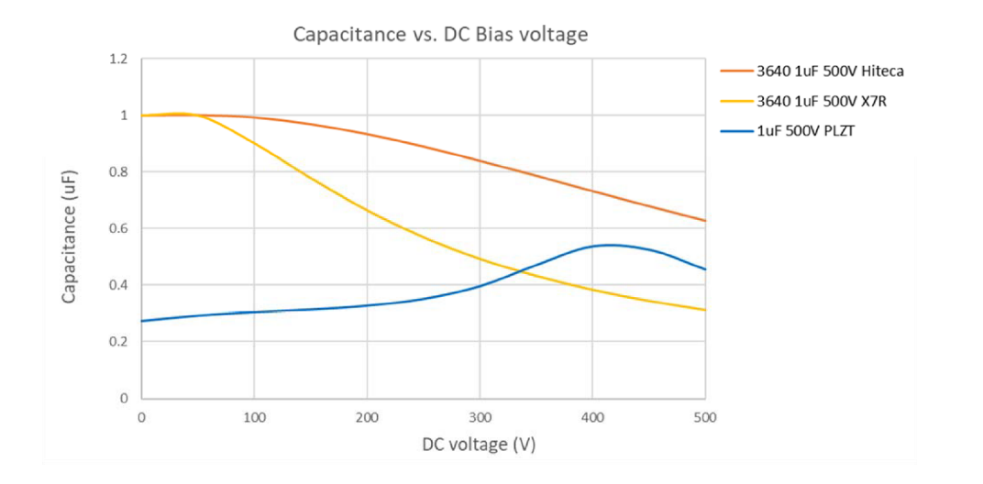
When an engineer designs a circuit, he or she needs to ensure that each component will “do what it says on the box.” In multi-layer ceramic capacitor (MLCC) design, one area that often concerns engineers is the fact that capacitance can fluctuate with voltage, which is known as “DC bias” or “voltage coefficient.”
Read More
Topics:
Capacitor,
Automotive,
Electric Vehicles
As countries around the world tighten emissions standards, the demand for fully electric vehicles (EVs) is increasing. However, for EVs to see mainstream adoption, manufacturers must address the primary consumer concerns: longer driving ranges and faster charging. To address these concerns, EV manufacturers are beginning to redesign their vehicles to switch from the 400V battery systems widely used today to 800V battery systems, which can offer twice the voltage and 2.7 times the power density compared to a 400V system.
Read More
Topics:
Capacitor,
Automotive,
Electric Vehicles,
High Reliability
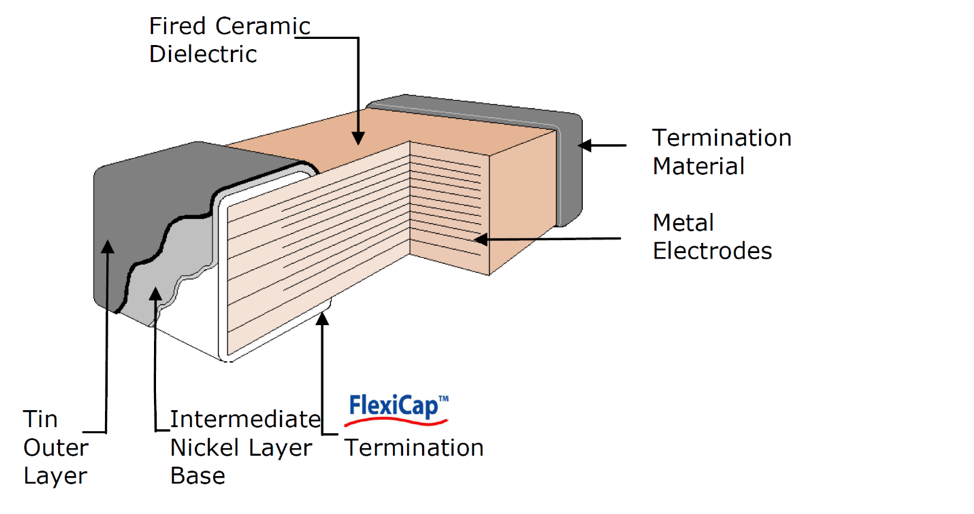
Today, surface-mount multilayer ceramic capacitors (MLCCs) are used in incredibly harsh applications, resulting in increased concern from end users over the likelihood of reliability issues such as mechanical cracking. Thus, at Knowles Precision Devices our engineers are often asked if our capacitors offer flexible termination that increases the mechanical strength of our components, which helps mitigate these potential issues. Our customers can rest assured that not only do we offer flexible termination in our capacitors, we were actually the creators of the first flexible termination technology for MLCCs.
Read More
Topics:
Capacitor
At Knowles Precision Devices, our expertise in capacitor technology helps developers working on some of the world’s most demanding applications across the medical device, military and aerospace, telecommunications, and automotive industries.
Read More
Topics:
Capacitor,
Automotive,
Military and Aerospace,
Medical
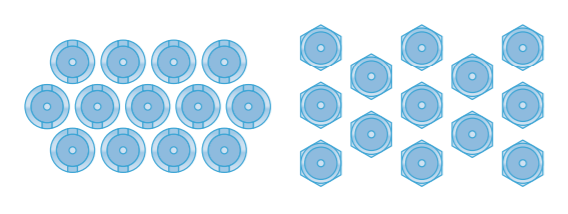
EMI filtering plays an important role in reducing noise that could interfere with other devices; in medical or defense applications, for example, false alarms due to external interference could be detrimental. Here, we will continue our EMI filtering exploration with application and installation considerations. For earlier reading, review EMI filtering basics and filter performance.
Read More
Topics:
Capacitor,
RF and Microwave
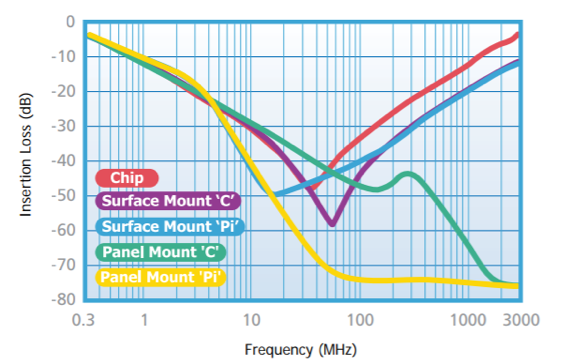
To comply with international legislation such as the EU Directive on EMC or the FCC, EMI filtering is an essential element of equipment design. Here, we will continue to explore EMI filtering through insertion loss and filtering performance.
The insertion loss performance shows signal attenuation at any given frequency. As a metric, the insertion loss performance is most useful as a guide in the filter selection process; the actual performance in service can vary depending on circuit characteristics.
Read More
Topics:
Capacitor,
RF and Microwave
In mission-critical applications, additional screening and testing is required to ensure that only the most robust parts make it to the finished product. Preventative measures, like high quality standards, lessen the possibility of failure in the field and minimize the likelihood of astronomical downstream costs.
Read More
Topics:
Capacitor,
News and Events,
Military and Aerospace,
High Reliability